Used Commercial Trucks Are Affordable, Until The Emissions Systems Fail
Used Class 3 to 7 commercial trucks, box trucks, service trucks, step vans, telecom units, tow trucks, and municipal vehicles, can be a bargain compared to buying new. They are the backbone of delivery fleets, contractor businesses, HVAC and electrical service companies, rental fleets, telecom and utility fleets, and food service and beverage distributors.
The catch is what happens after you put that “affordable” truck into real work. For many operators, the first big surprise is that aftertreatment failures are the number one hidden cost in used commercial trucks. Those failures show up more often, earlier, and more severely than they do on new units.
This guide explains why used work trucks suffer more emissions failures, which components fail the most, what repairs really cost, the early warning signs to watch, how fleet duty cycles accelerate wear, how to prevent chronic issues, and where coverage like TruckProtect fits into the picture.
Why Aftertreatment Fails More Often In Used Commercial Trucks
Most used commercial trucks do not come from gentle, highway only service. They come from parcel fleets, rental operations, small contractors, and short route delivery work. These operators often delay DPF cleaning, run heavy idle, skip preventive emissions maintenance, avoid expensive repairs until resale, and focus on “keep it running” fixes instead of long term health.
By the time a truck hits the used market, its emissions system already has a history the next owner inherits. High idle time is a big part of that story. Commercial trucks idle at job sites, sit at houses, make dozens of stops per day, run power tools, and keep engines on for HVAC. Idle time drives soot production, EGR clogging, DPF fill rates, fuel dilution, and DEF crystallization. Many used units show low miles but very high engine hours, which is far worse for aftertreatment.
City, residential, and urban routes are another problem. Aftertreatment systems were designed around sustained highway speed, stable exhaust heat, and uninterrupted regen cycles. Commercial routes deliver thirty second stops, cold starts, low engine load, frequent shutdowns, and minimal exhaust airflow. DPF systems rarely reach full regen temperature.
When a diesel tech pulls regen history on a used truck, they often see canceled regens, incomplete regens, frequent “request regen” notices, high soot load events, and failed regens. Dozens of aborted regens shorten DPF and DOC life dramatically.
Sensors add another layer. NOx, DPF pressure, exhaust temperature, EGR, and SCR efficiency sensors all age from vibration, heat cycling, contamination, corrosion, and moisture. Used trucks inherit sensors that may already be near failure.
DEF systems also have a clock. Around five to seven years in, DEF heaters degrade, pumps clog, injectors crystallize, quality sensors fail, and lines crack. Those issues cascade into full SCR problems.
Finally, the duty cycles that define Amazon DSP fleets, FedEx Ground, grocery and beverage delivery, construction supply, telecom field service, and HVAC and electrical work are simply not emissions friendly. They clog DPFs faster, overload EGR systems, prevent SCR from reaching proper temperature, cause DEF crystallization, and accelerate turbo wear. By the time these trucks reach a second owner, their aftertreatment systems are often at or near end of life.
The Most Common Aftertreatment Failures In Used Commercial Trucks
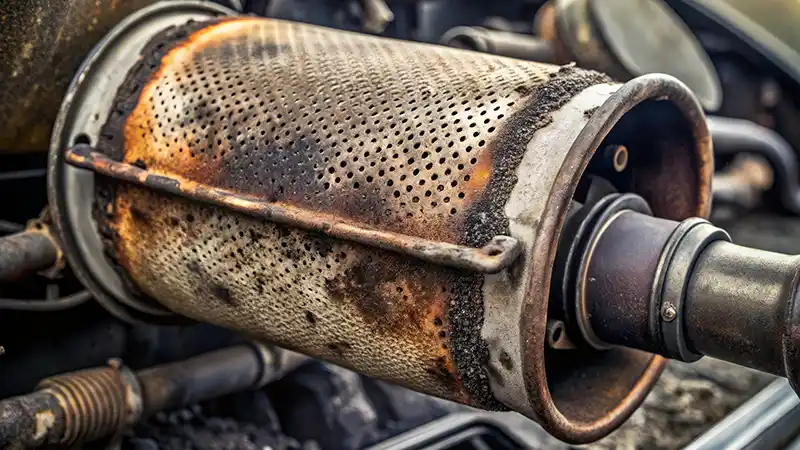
The first and most frequent issue is DPF plugging. Used trucks often arrive with high soot load, ash saturation, and filters near the end of their usable life. Symptoms include frequent regens, poor acceleration, rising exhaust gas temperatures, and derate warnings. Typical repair costs run 2,000 to 5,000 dollars.
DPF filter meltdown is the severe version, usually caused by excessive soot, failed regens, coolant contamination, or turbo imbalance. That repair often costs 3,000 to 6,000 dollars.
DOC failures are also common. Diesel oxidation catalysts crack or become contaminated over time, especially in urban duty. DOC replacement usually costs 2,000 to 5,000 dollars.
SCR systems fail due to DEF contamination, crystallization, failed NOx sensors, and catalyst degradation. SCR repairs and replacements typically cost 3,000 to 7,500 dollars.
EGR valves and coolers are another frequent problem on used commercial trucks. Sticky valves, restricted passages, and cracked coolers are the norm, not the exception. These repairs usually fall between 1,500 and 4,000 dollars.
DEF pumps work constantly and wear out after years of heat, crystallization, and contamination. Replacement costs are typically 1,200 to 3,000 dollars.
NOx sensors are notorious. Heat and vibration destroy them over time, and prices have climbed. Each sensor often costs 400 to 1,000 dollars.
Worn turbos contribute to exhaust backpressure and high soot load, leading to incomplete regens and rising EGTs. Turbo replacements run 2,500 to 7,500 dollars.
Older trucks also suffer wiring harness damage from moisture, corrosion, and abrasion. Harness repairs can range from 200 to 3,500 dollars depending on how deep the problem goes.
Why Used Commercial Trucks Are So Sensitive To Emissions Problems
Used commercial trucks live in low speed, low temperature routes where the DPF rarely reaches full regen temperature. They idle excessively, which turns the engine into a soot factory. They stop and start constantly, interrupting active regens. They run PTO equipment that keeps RPM up while exhaust temperature stays marginal.
They also rack up far more engine hours per mile than highway tractors, which means more wear and more soot per odometer mile. On top of that, they inherit someone else’s emissions problems. Many used trucks were sold precisely because the previous owner wanted to avoid the next big aftertreatment bill.
The Real Cost Of Emissions Repairs In Used Commercial Trucks
Once a used commercial truck enters its second life, it is common to see 3,000 to 8,500 dollars per year in emissions related costs per unit. One off failures can be brutal, SCR repairs at 4,000 to 7,500 dollars, DPF work at 2,000 to 5,000, EGR repairs at 1,500 to 4,000, DEF pumps at 1,200 to 3,000.
The real shock comes when failures cascade. A stuck EGR valve can overload the DPF, which triggers SCR efficiency faults, forces the DEF pump to overwork, and pushes the turbo into overspeed. That chain can easily add up to 8,000 to 14,000 dollars.
This is exactly the risk TruckProtect plans are designed to stabilize for used trucks entering service.
How To Reduce Aftertreatment Failures In Used Commercial Trucks
The best time to get ahead of emissions problems is before the truck goes into full duty. That starts with immediate DPF and DOC inspections and, if needed, cleaning or replacement. Many used units are already at end of life on those parts.
Pulling regen history with a scan tool is critical. Incomplete or aborted regens, frequent forced regens, and high soot events are red flags. Replacing key sensors proactively, especially NOx and DPF pressure sensors, removes weak links that can trigger bigger failures.
Using high quality DEF and inspecting the DEF tank for contamination helps protect the SCR system. Addressing engine performance issues early, such as poor combustion or misfires, reduces soot and protects the DPF.
Reducing excessive idle through driver policies and training cuts soot production. Cleaning EGR passages and inspecting the cooler during intake work reduces downstream emissions failures. None of these steps make aftertreatment painless, but they can turn chronic problems into manageable ones.
When Warranty Coverage Matters Most For Used Work Trucks
Used commercial trucks face higher failure frequency, higher repair severity, inherited emissions problems, higher downtime costs, and more unpredictable repair cycles than new units. That is where TruckProtect coverage naturally fits.
Plans that include aftertreatment components, sensors, fuel system parts, turbo, cooling, and related electrical systems help reduce repair unpredictability, stabilize operating costs, and make cost per mile or cost per hour easier to forecast, especially on older vehicles with unknown histories.
Coverage is not mandatory, but for many second life trucks it is one of the few tools that can keep a good deal from turning into a financial trap.
Conclusion, Used Commercial Trucks Do Not Fail Because They Are Bad, They Fail Because Their First Owner Used Them Hard
Commercial trucks live in the harshest duty cycles, stop and go, idle heavy, urban driving, PTO work, short routes, and heavy equipment loads. Those conditions are not emissions friendly. By the time a truck reaches its second owner, the aftertreatment system is often fatigued and close to failure.
Understanding the common failures and their causes helps operators budget smarter, maintain proactively, reduce downtime, protect cash flow, and decide when coverage makes sense.
TruckClub provides the clarity behind those decisions. TruckProtect helps reduce the financial shock when used commercial trucks inevitably break, so fleets and small businesses can keep those “affordable” trucks working profitably.