The last mile is the most expensive, unpredictable, and logistically complex segment of the supply chain. As e-commerce booms and customer expectations for rapid, reliable delivery rise, the pressure on carriers to innovate has never been greater. In 2025, a new solution is capturing the industry’s imagination: the hybrid drone and truck delivery model. By combining the long-haul power and payload of traditional trucks with the speed and agility of drones, fleets are beginning to rewrite the rules for last-mile logistics.
This article offers a comprehensive, narrative-driven look at the state of hybrid drone-truck delivery. We’ll cover the operational models, technology, real-world pilots, regulatory landscape, economics, and the broader implications for carriers, shippers, and customers. Whether you’re a fleet manager, a logistics strategist, or just curious about the future of delivery, this is your guide to the next frontier in freight.
The Last-Mile Challenge
Last-mile delivery is a persistent pain point for carriers. Urban congestion, limited parking, unpredictable traffic, and the high cost of labor make the final leg of delivery the most expensive and time-consuming. In rural areas, long distances between stops, poor infrastructure, and weather can add to the challenge. Industry estimates suggest that last-mile delivery accounts for over half of total shipping costs, even as the segment represents only a fraction of total miles traveled.
The rise of e-commerce has only intensified these pressures. Customers now expect same-day or next-day delivery for everything from groceries to electronics. High-density urban areas are especially challenging, with drivers often forced to double-park, circle for blocks, or walk long distances to complete a delivery. In rural areas, the cost of reaching a single customer can be prohibitive, leading to service gaps or surcharges.
The Hybrid Solution: Drones Plus Trucks
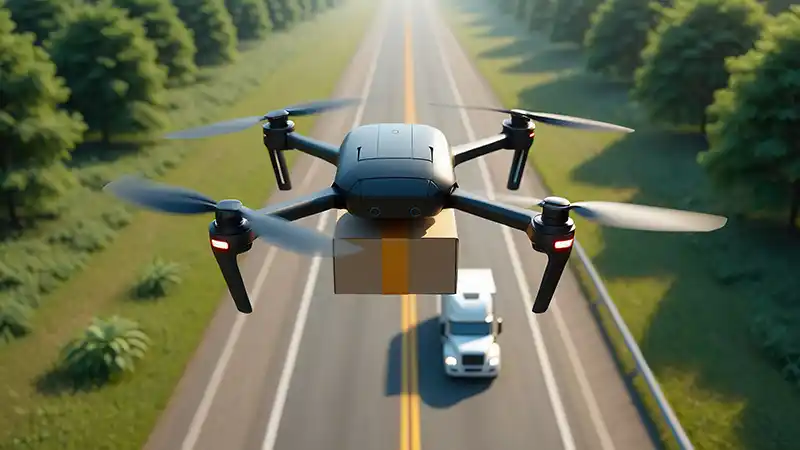
Enter the hybrid drone-truck model. In this approach, a delivery truck serves as a mobile launchpad and command center for a fleet of drones. The truck follows a planned route, stopping at optimal locations based on delivery density and drone range. At each stop, drones are dispatched to deliver packages to nearby addresses, then return to the truck for recharging and reloading.
This model is not science fiction. It’s already being piloted by major retailers, logistics providers, and technology startups worldwide. The promise: combine the best of both worlds, the range and payload of trucks with the speed and flexibility of drones—to bypass traffic, reach remote locations, and cut costs.
How Hybrid Delivery Works
Let’s walk through a typical hybrid delivery run:
- Pre-Planning: At the distribution center, packages are sorted by delivery method. Some are earmarked for drone drop-off, others for traditional truck delivery.
- Route Optimization: AI-powered software plans the truck’s route, identifying optimal drone launch points based on delivery density, geography, and customer time windows.
- On the Road: The truck follows its route, stopping at designated locations. At each stop, one or more drones are launched to deliver packages within a defined radius,usually 2 to 5 miles.
- Drone Operations: Drones fly autonomously to recipients’ addresses, drop off packages (at doorsteps, balconies, or secure lockers), and return to the truck for battery swapping or recharging.
- Completion: The truck handles larger or restricted deliveries, serves as a backup for failed drone drops, and completes the route.
This system allows a single truck and driver to serve more stops per hour, especially in areas where traffic, parking, or distance make traditional delivery inefficient.
Technology Under the Hood
Advanced Drones
Modern delivery drones are a far cry from hobbyist quadcopters. They are engineered for commercial use, with:
- Payload capacities of 5–20 pounds, enough for most e-commerce parcels.
- Flight ranges of 5–10 miles per charge, with rapid battery swap capabilities.
- Autonomous navigation using GPS, lidar, obstacle avoidance, and onboard cameras.
- Redundant systems for safety, including fail-safe return-to-base protocols and geofencing.
Smart Trucks
Hybrid trucks are equipped with:
- Automated drone bays for launch, recovery, and charging.
- Real-time fleet management systems that coordinate truck and drone movements.
- 5G or satellite connectivity to maintain constant communication.
- Package handling robots or conveyor belts to speed up loading and unloading.
AI and Data Analytics
AI-driven platforms optimize routes, balance truck and drone workloads, and dynamically adapt to traffic, weather, or customer changes. Predictive analytics track vehicle and drone health, preventing breakdowns and delays.
Real-World Pilots and Case Studies
Rural Healthcare: Reaching the Unreachable
A global logistics company partnered with a regional health network to deliver critical medicines to remote communities. Trucks carried drones to central locations, from which drones flew the final miles to clinics and homes unreachable by road. The result: delivery times halved, improved patient outcomes, and reduced costs.
Urban Blitz: E-Commerce at Speed
A leading retailer piloted hybrid delivery in a dense city, using trucks as mobile drone bases. Drones handled deliveries to high-rise apartments and hard-to-park locations, while drivers focused on bulkier packages. Customer satisfaction rose, and the fleet saw a 12% reduction in last-mile costs.
Disaster Relief: Rapid Response
After a hurricane, emergency agencies deployed trucks with drones to deliver food, water, and medical supplies to isolated areas. The hybrid model proved faster and more adaptable than traditional relief convoys, reaching cut-off communities within hours.
Benefits of Hybrid Delivery
For Fleets
- Productivity: Trucks serve more stops per hour, with drones covering hard-to-reach addresses.
- Cost Efficiency: Fewer miles driven, less fuel burned, and reduced need for extra drivers.
- Scalability: Fleets can adjust the number of drones per truck based on demand, geography, and regulations.
For Shippers
- Speed: Drones bypass traffic and deliver directly to customers.
- Expanded Reach: Rural and remote areas become accessible without new infrastructure.
- Sustainability: Lower emissions per package delivered, supporting ESG goals.
For Customers
- Choice: Customers can select drone or truck delivery based on preference, urgency, or accessibility.
- Tracking: Real-time updates and communication throughout the delivery process.
- Reliability: Hybrid fleets can adapt to weather, traffic, and disruptions, ensuring packages arrive on time.
Regulatory and Operational Challenges
Airspace and Safety
- The FAA regulates drone flights, including altitude, flight path, and line-of-sight rules. Waivers are needed for beyond-visual-line-of-sight (BVLOS) operations, which are essential for scalable hybrid delivery.
- Urban restrictions limit drone flights over crowds, schools, or sensitive areas. Some cities ban drone deliveries outright.
- Noise and privacy concerns can prompt community pushback, especially in dense neighborhoods.
Technology Integration
- Interoperability between truck, drone, and dispatch systems is complex.
- Battery management and charging logistics are critical to avoid delays.
- Weather remains a challenge: drones are more sensitive than trucks to wind, rain, and temperature extremes.
Workforce and Training
- Drivers may need to monitor drone operations, handle technical issues, and interact with customers.
- Fleets must train staff in drone maintenance, flight planning, and regulatory compliance.
Economics of Hybrid Delivery
Upfront Investment
- Trucks must be retrofitted with drone bays, charging systems, and control software.
- Drones themselves are a capital expense, with costs ranging from $5,000 to $50,000 each.
- Permits, insurance, and airspace management add to the total investment.
Return on Investment
- The more stops per route, the greater the efficiency gains.
- Hybrid models shine in tight or same-day delivery windows, where speed is critical.
- As customer adoption grows, costs can be recouped more quickly.
Future Outlook: Scaling Hybrid Models
Growth Projections
Industry analysts expect that by 2030, up to 20% of last-mile deliveries could use some form of hybrid drone-truck model. Advances in battery technology, autonomous flight, and regulatory frameworks will drive adoption.
Autonomous Trucks and Drones
Fully autonomous trucks could serve as mobile drone launchpads, with minimal human supervision. This could further reduce costs and expand the reach of hybrid fleets.
Integration with Smart Cities
Hybrid delivery will integrate with smart city infrastructure—dedicated drone corridors, automated lockers, and real-time traffic management, creating a seamless, multimodal logistics ecosystem.
Community and Environmental Impact
Reducing Carbon Footprint
Hybrid models can reduce emissions by optimizing routes, cutting idling and congestion, and using electric drones for short hops. Some fleets are even exploring solar-powered drones and electric trucks for a fully green delivery chain.
Community Acceptance
Carriers are engaging with communities to address concerns about noise, privacy, and safety. Transparency, data sharing, and pilot programs help build trust and pave the way for broader adoption.
Conclusion
The fusion of drones and trucks is more than a technological novelty, it’s a game-changing solution for the toughest problems in last-mile logistics. Hybrid delivery models offer a practical, scalable path to faster, cheaper, and greener freight. The road ahead will require investment, innovation, and collaboration between fleets, regulators, and communities. But for those willing to take flight, the sky’s the limit.