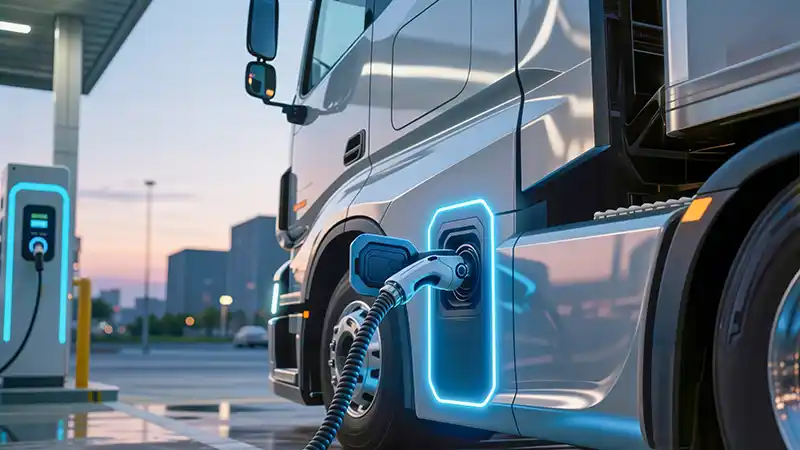
The push to decarbonize transportation is transforming every link in the supply chain, but nowhere is the challenge more formidable, or the stakes higher—than in long-haul trucking. Diesel-powered big rigs have long been the backbone of American freight, hauling everything from groceries to electronics across thousands of miles. But they also account for a disproportionate share of transportation emissions, making them a prime target for climate action.
As states, shippers, and federal agencies ramp up pressure for cleaner supply chains, the spotlight is firmly on electric trucks. Can battery power truly replace diesel for cross-country hauls? What’s possible today, what’s on the horizon, and how can fleets prepare for a future where zero-emission freight is not just a goal, but a requirement?
This article delivers a detailed, practical look at the electrification of long-haul trucking in the U.S., from battery technology and charging infrastructure to regulatory mandates, pilot programs, and the business case for fleets. If you’re a fleet manager, logistics strategist, or industry observer, this is your roadmap to the coming EV revolution on America’s highways.
Why Electrify Long-Haul Trucks?
The Environmental Imperative
Heavy-duty trucks make up just 4% of vehicles on American roads, but they are responsible for nearly a quarter of all transportation-related greenhouse gas emissions. They’re also major contributors to air pollution in communities near highways and logistics hubs. Electrification is a critical step toward meeting national and state climate goals, improving air quality, and protecting public health.
Regulatory Pressure
States like California are leading the charge with aggressive mandates. The Advanced Clean Trucks (ACT) rule requires an increasing percentage of new truck sales to be zero-emission vehicles (ZEVs) each year. The EPA is tightening national emissions standards, and federal incentives are making it easier for fleets to invest in clean technology.
Shipper and Customer Demand
Major retailers, manufacturers, and logistics providers have set ambitious net-zero targets, pushing their carriers to adopt zero-emission vehicles. Green supply chains are increasingly a requirement for doing business with the world’s biggest brands.
Battery Technology: The Heart of Electric Trucks
What’s Under the Hood?
Modern electric trucks use massive lithium-ion battery packs, typically storing between 400 and 800 kWh of energy. These batteries power one or more electric motors, delivering instant torque, smooth acceleration, and regenerative braking.
Today’s Capabilities
- Range: Most Class 8 electric trucks offer 150–300 miles per charge under real-world conditions, depending on load, terrain, and weather.
- Charging: Fast chargers can deliver an 80% charge in 90–120 minutes, but full charging may take up to 4 hours. Megawatt charging systems (MCS) are being piloted, promising to add 400 miles of range in under an hour.
- Payload: Batteries add significant weight, reducing payload by 1,000–3,000 pounds compared to diesel.
- Cost: Upfront purchase prices are 2–3 times higher than diesel, but total cost of ownership (TCO) can be competitive due to lower fuel and maintenance costs.
Next-Generation Batteries
R&D is focused on solid-state batteries, lithium-metal chemistries, and other innovations that promise higher energy density, faster charging, and longer life. These could push real-world range to 500+ miles and reduce charging times to under 30 minutes.
Charging Infrastructure: The Bottleneck
Depot Charging
Most early adopters rely on overnight charging at fleet depots, using high-capacity chargers (150–350 kW). This works well for regional and return-to-base operations, but not for true long-haul routes.
Public Fast Charging
The National Electric Vehicle Infrastructure (NEVI) program, funded by the federal government, aims to deploy thousands of charging stations along major freight corridors by 2030. Truck stop chains, utilities, and OEMs are racing to build out the network.
Megawatt Charging
The MCS standard, now in pilot phase, will enable charging at rates of 1–3 MW—enough to add hundreds of miles of range in under an hour. Early megawatt chargers are being installed at logistics hubs and major truck stops.
Grid Upgrades
Widespread truck electrification will require major upgrades to the electric grid, including new substations, transformers, and renewable energy integration.
Real-World Pilots and Deployments
Tesla Semi
Tesla’s long-awaited Semi entered limited production in 2024, with PepsiCo, Walmart, and other major fleets running pilot routes. Early feedback highlights strong performance on short-haul and regional lanes, with drivers praising acceleration and quiet operation. Range is currently 200–300 miles per charge, with megachargers being installed at strategic locations.
Freightliner eCascadia
Daimler’s eCascadia is in use with carriers like Schneider and NFI, hauling freight up to 230 miles per charge. Fleets report lower maintenance costs, high driver satisfaction, and significant fuel savings.
Volvo VNR Electric
Volvo’s VNR Electric is deployed in California and the Northeast, serving regional and drayage routes. Range is 150–275 miles, with fast charging at fleet depots.
Nikola, BYD, and Others
Nikola and BYD are piloting Class 8 BEVs with select carriers, focusing on port drayage and regional distribution. Several startups are developing battery-swap models to reduce downtime.
Operational Realities for Fleets
Route Planning
Electric trucks excel on predictable, return-to-base routes with charging at both ends. For true long-haul, careful planning is needed to align charging stops with hours-of-service (HOS) breaks and delivery windows. Some fleets are using AI-powered route optimization to maximize efficiency.
Load and Payload Management
Battery weight and range must be factored into load assignments. Fleets are using telematics and advanced analytics to optimize payloads and minimize empty miles.
Maintenance and Training
Electric trucks require less maintenance than diesels, no oil changes, fewer moving parts—but fleets must train technicians on high-voltage systems and battery management.
Driver Acceptance
Drivers appreciate the quiet ride, instant torque, and lack of diesel fumes. Range anxiety and charging times are concerns, but these are easing as infrastructure improves.
The Economics of Electric Trucking
Total Cost of Ownership (TCO)
- Fuel Savings: Electricity is cheaper and less volatile than diesel.
- Maintenance: Fewer oil changes, filters, and moving parts mean lower costs.
- Incentives: Federal and state grants, tax credits, and utility rebates can offset upfront costs.
- Resale Value: Still uncertain, as the used electric truck market is new.
Barriers
- Upfront Cost: Even with incentives, the sticker price is high.
- Depreciation: Battery life and replacement costs are a concern.
- Downtime: Charging takes longer than fueling, though this is improving.
Environmental and Social Impact
Emissions Reduction
Switching from diesel to electric can cut greenhouse gas emissions by 60–90%, depending on the electricity mix. Local air quality improves, especially in communities near warehouses, ports, and highways.
Noise and Vibration
Electric trucks are significantly quieter, reducing noise pollution in cities and along freight corridors.
Job Creation
Electrification is creating new jobs in battery manufacturing, charging infrastructure, and electric vehicle maintenance.
Regulatory Drivers and Incentives
Federal Programs
- Inflation Reduction Act: Offers tax credits for EV purchases and charging infrastructure.
- NEVI Program: Funds highway charging stations.
- EPA Grants: Support for zero-emission truck deployments in disadvantaged communities.
State Mandates
- California ACT Rule: Requires increasing ZEV sales starting in 2024.
- Other States: New York, New Jersey, and others are adopting similar rules.
Local Initiatives
Cities and ports are creating zero-emission zones, requiring or incentivizing electric trucks for urban deliveries and drayage.
Challenges and Hurdles
Range and Charging Speed
Current battery technology limits range, especially with heavy loads and extreme weather. Fast, reliable charging is critical for long-haul viability.
Infrastructure Gaps
Charging stations are unevenly distributed, with many regions lacking the capacity for heavy-duty vehicles.
Power Supply
High-powered charging requires robust grid connections and renewable energy integration.
Standardization
Multiple charging standards (CCS, MCS, proprietary systems) create complexity for fleets operating nationally.
Residual Value and Second Life
Uncertainty about battery degradation and resale value is a barrier for some fleets.
The Road Ahead
Near-Term Outlook
- Regional and drayage: Electric trucks will dominate short-haul and port operations within five years.
- Long-haul: Early adopters will focus on dedicated, predictable routes with charging at both ends.
Mid- to Long-Term
- Battery advances: Solid-state and next-gen chemistries will push range to 500+ miles.
- Megawatt charging: Widespread deployment will enable true coast-to-coast electric freight.
- Hydrogen and hybrids: May fill gaps for ultra-long-haul or remote routes.
Strategic Recommendations for Fleets
- Start with pilots: Test electric trucks on regional lanes to gain experience.
- Invest in depot charging: Prepare infrastructure for future scale-up.
- Monitor incentives and regulations: Stay ahead of mandates and funding opportunities.
- Train staff: Build expertise in EV maintenance and charging operations.
- Partner with OEMs and utilities: Collaborate on technology and infrastructure development.
Conclusion
Electrifying America’s big rigs is a massive challenge, but also a massive opportunity. Battery power is already proving its value in regional and short-haul trucking, with rapid advances on the horizon for long-haul routes. Fleets that embrace the transition now, by piloting electric trucks, investing in infrastructure, and training their teams, will be best positioned to lead in a zero-emission future.
The journey to electrified long-haul freight won’t be easy, but the destination is clear: cleaner air, lower emissions, and a more sustainable supply chain for all.