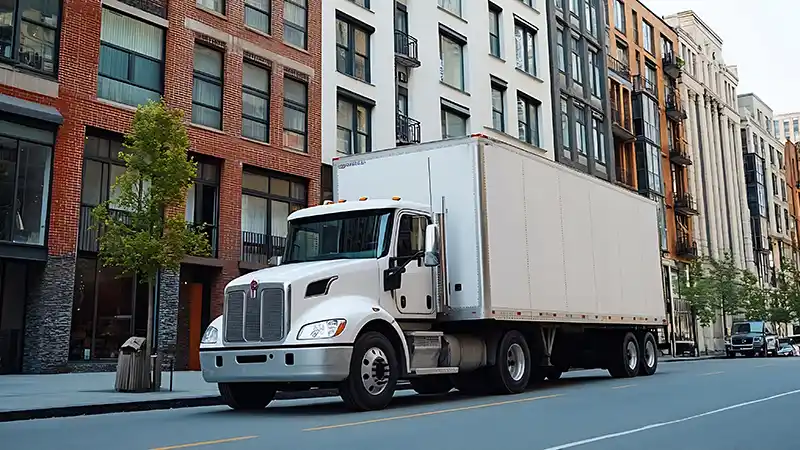
Commercial Trucks Do Not Break Because They Are Weak, They Break Because Of The Work
Class 3 to 7 box trucks, service trucks, telecom units, step vans, tow trucks, and municipal vehicles are built to be tough. The problem is not that they are fragile. The problem is that their duty cycle is brutal.
Unlike highway semis that cruise at steady speed, commercial trucks spend their lives stopping, starting, idling, accelerating from low RPM, braking, and repeating that cycle hundreds of times a day. That pattern creates harsh mechanical conditions inside the engine, driveline, turbo, fuel system, emissions system, and cooling system.
This guide explains exactly how stop and go driving damages commercial truck engines, why it leads to the most expensive failures, what fleets can do to reduce wear, what the real repair costs look like, and how coverage, including TruckProtect, fits into long term fleet management.
Why Stop And Go Driving Is The Hardest Duty Cycle For Engines
Commercial truck engines are designed for a range of uses, but continuous stop and go driving pushes them into a worst case scenario for wear. Every time the truck stops and starts, oil pressure changes, turbocharger speed spikes and drops, fuel injection timing adjusts, exhaust temperature falls, EGR flow recalibrates, the cooling system cycles, emissions systems lose critical heat, and the transmission and torque converter take another load hit.
No other duty cycle combines constant cold operation, rapid acceleration, frequent braking, and high idle in the same way. Over thousands of hours, that pattern grinds away at every major component.
How Stop And Go Driving Damages Commercial Truck Engines
1. Low Speed Operation Builds Excess Soot
Stop and go trucks tend to run colder than highway tractors. Short trips, light throttle, and frequent idle create incomplete combustion, low exhaust temperatures, and high soot production. That soot loads the DPF, coats the EGR valve and cooler, sticks to turbo vanes, contaminates the intake system, and thickens engine oil.
The result is accelerated wear across the emissions system, turbo, and internal engine parts.
2. Turbochargers See Rapid Spool And Drop Cycles
Every time the driver leaves a stop, the turbo spools, boost rises, and torque demand spikes. As soon as the truck slows or stops, boost drops and the turbo cools.
These rapid cycles cause bearing wear, vane seizure in variable geometry turbos, housing cracking, and oil coking if shutdowns happen while the turbo is still hot. Turbo failures are especially common in stop and go fleets, both in gas delivery vans and medium duty diesels.
3. Cylinder Pressure Spikes Wear Pistons And Rings
Starting from a stop with a loaded truck creates high cylinder pressure and heavy combustion pulses. Over time, that leads to piston skirt wear, ring degradation, increased blow by, loss of compression, and higher oil consumption. Service trucks with heavy tool bodies and loaded box units feel this the most.
4. More Idle Time Means More Hours And Faster Wear
Two trucks can both show 100,000 miles, but their hours tell the real story. A highway truck might have 2,000 hours. A commercial truck running routes can easily have 5,000 to 7,500 hours.
Engine wear tracks hours more than miles. Stop and go schedules add hundreds of idle hours every month, which quietly wears cylinder walls, fuel system components, bearings, and oil quality.
5. Cooling Systems Never Reach Stable Temperature
Cooling systems work best when temperatures stabilize. In stop and go duty, temperatures constantly rise and fall. The engine heats up under load, cools at idle, then heats again. Fans cycle on and off. Components expand and contract.
This constant cycling leads to radiator cracks, fan clutch wear, thermostat failures, coolant leaks, and water pump strain. Cooling failures are among the top breakdown causes in commercial fleets.
6. Fuel Systems Work Harder Per Mile
In urban duty, injectors fire more often per mile and constantly adjust timing, pressure, and spray patterns. They see more micro dosing events, more pressure swings, and more sensitivity to contamination.
That drives injector tip wear, pump strain, inconsistent spray, over fueling, and poor atomization. The downstream effects are poor fuel economy, extra soot, more regens, and even engine knock.
7. Aftertreatment Systems Are A Poor Match For The Duty Cycle
DPF, SCR, DOC, and EGR systems were engineered around long, steady, high temperature highway driving. Commercial trucks do the opposite, short distances, cold cycles, low exhaust temperatures, heavy idle, and dense urban routes.
The result is failed regens, plugged DPFs, clogged EGR tubes, SCR efficiency faults, and constant NOx sensor failures. The technology is mandated, but the duty cycle fights it. Programs like TruckProtect exist in part because aftertreatment failures in these fleets are both unpredictable and expensive.
8. Frequent Cold Starts Increase Wear
Cold starts mean poor lubrication, high friction, extra turbo strain, unburned fuel in cylinders, and rich mixtures. Many commercial trucks restart ten, twenty, or thirty times per day. Over months and years, that adds up to enormous cold start wear on bearings, rings, and turbo components.
9. Rapid Acceleration Loads The Engine Harder Than Cruise
From the engine’s perspective, accelerating from zero to twenty miles per hour over and over is far harder than cruising at highway speed. Each launch demands high torque and fuel, creating more strain, heat cycles, injector stress, and turbo stress per mile than steady state driving.
The Most Common Engine Related Failures In Stop And Go Fleets
Across parcel delivery, telecom, utilities, municipal fleets, mobile service trucks, last mile logistics, and food service distribution, the same failures appear again and again.
- Fuel injector failures, typically 1,200 to 4,500 dollars, driven by continuous low speed operation and heavy cycling.
- Turbo failures, especially variable geometry units, often 2,500 to 7,000 dollars, caused by repeated rapid spool cycles and heat stress.
- EGR valve and cooler failures, usually 1,500 to 4,000 dollars, from soot buildup and cold operation.
- DPF clogging and regen failures, commonly 2,000 to 5,000 dollars, due to low exhaust temperature and short trips.
- Sensor failures, NOx, EGT, differential pressure, in the 200 to 900 dollar range, caused by thermal cycling and vibration.
- Cooling system failures, 500 to 2,500 dollars, from inconsistent heat cycles and urban driving conditions.
The True Cost Of Stop And Go Engine Damage
The average repair cost per event in these fleets often lands between 700 and 6,500 dollars, depending on which component fails. Annual engine and emissions related spend per truck commonly falls in the 1,800 to 4,500 dollar range once units are a few years old.
Each event usually brings one to three days of downtime. Hidden costs include missed deliveries, route reshuffling, overtime, rental or spare truck usage, and reduced customer satisfaction. For delivery based businesses, the downtime and lost revenue can easily outweigh the repair itself.
How Fleets Can Reduce Stop And Go Engine Wear
Large fleets and municipalities use a mix of practical strategies to blunt the damage.
They reduce idle time through driver policies and training, since idle burns fuel and accelerates soot. They encourage short highway runs, even fifteen minutes of freeway driving a few times per week, to support passive regen and prevent DPF overload.
They upgrade air filtration in dusty areas to protect turbos and injectors, and they prioritize cooling system health with regular inspections, clean radiators, and timely component replacement.
They replace sensors at the first warning instead of clearing codes and hoping for the best, because sensors are behind many derates. They base oil changes on engine hours rather than miles, which better reflects urban duty. They also pay close attention to fuel quality, since contaminated fuel is a fast way to destroy injectors and pumps.
When Warranty Coverage Makes Sense
Stop and go fleets fail more often, fail earlier, fail across multiple systems, and fail less predictably than highway operations. That is why many box truck, service truck, and municipal fleets use coverage programs like TruckProtect to stabilize repair budgets, cost per mile, and downtime risk.
TruckProtect plans commonly include engine, turbo, fuel system, aftertreatment, electrical, cooling, and powertrain coverage, which are exactly the categories most affected by stop and go driving. Coverage does not prevent failures, but it does reduce the financial impact when they happen.
Conclusion, Stop And Go Driving Is A Truck Killer, But You Can Manage The Damage
Commercial trucks are not failing because they are poorly built. They are failing because city driving, route delivery, jobsite movement, utility work, and service calls create the perfect environment for engine and emissions wear.
By understanding how this duty cycle attacks engines, fleets can change maintenance schedules, train drivers, monitor key systems, and budget realistically. That combination helps improve uptime, protect engines, extend vehicle life, and smooth out the financial shocks that come with breakdowns.
TruckClub gives operators the clarity on what is really happening under the hood. TruckProtect provides real world protection when those stop and go miles finally catch up with the truck.