Why Box Truck Breakdowns Cost More Than Operators Expect
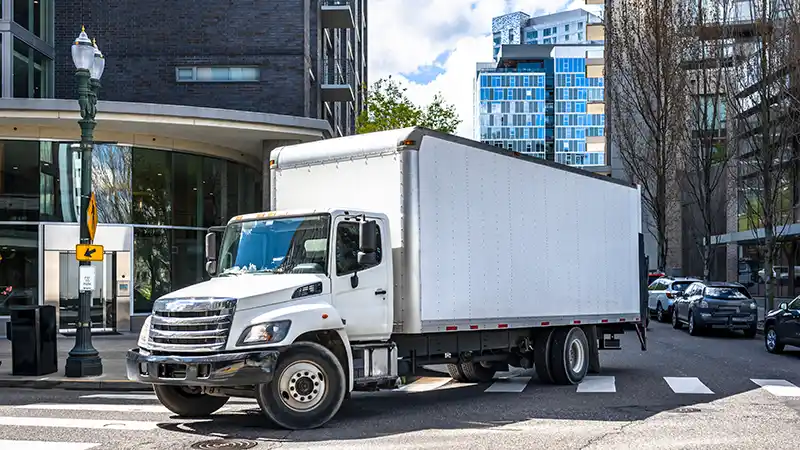
Box trucks are the backbone of last mile delivery, regional parcel routes, furniture and appliance delivery, rental fleets, food service and cold chain, courier operations, construction supply, and moving companies. If a city has commerce, it has box trucks.
On paper, they look simple compared to Class 8 tractors. In practice, box truck breakdowns are some of the most expensive and disruptive events in commercial trucking. The reason is not just the repair bill, it is the way these trucks are used.
Unlike many semi fleets that have spare units and predictable long haul lanes, box truck operations run tight urban schedules, multiple stops per hour, heavy idle usage, short routes, constant stop and go, residential and city traffic, and heavy seasonal peaks. When one truck goes down, there is rarely a clean backup plan.
A breakdown does not just mean parts and labor. It also means missed deliveries, failed time windows, overtime costs, replacement vehicle rental, route disruption, customer complaints, and service level penalties. For some small operators, one truck really does equal one business.
This guide breaks down the real world cost of box truck breakdowns, the most common failures by system, and practical strategies to reduce downtime. It also shows where TruckProtect coverage naturally fits into the financial risk equation for aging and mixed brand fleets.
The Real Cost Of A Box Truck Breakdown
For most fleets, the repair invoice is only a fraction of the true impact. The rest shows up as lost productivity, rental fees, and customer fallout.
Repair costs, parts plus labor, typically range from about 350 dollars for minor work to 12,000 dollars or more for major engine, transmission, or aftertreatment failures.
Downtime costs are often higher than the repair itself. A box truck that is down cannot complete its route, hit customer appointments, or meet service level agreements. Many fleets estimate downtime at 400 to 1,200 dollars per day when you factor in lost revenue and penalties.
Rental or replacement truck costs add another layer. Rental box trucks commonly run 125 to 250 dollars per day plus 14 to 35 cents per mile. A three or four day repair can easily push rental costs into the four figure range.
Driver pay during downtime does not disappear either. Drivers still get hourly pay, overtime, delay pay, and rescheduling time. That often adds 150 to 400 dollars per breakdown.
Then there is business interruption. For some operators, especially smaller ones, a single truck represents an entire route or service territory. Missed deliveries damage relationships. Failed medical or food deliveries can have legal or contractual consequences. Lost repeat business is hard to measure, but very real.
When you add all of this together, it becomes clear that the true cost of a breakdown is far more than the number on the repair order.
The Most Common Box Truck Breakdowns
Looking across mixed brand fleets, Hino, Isuzu, Freightliner M2, Ford F series, GM, International CV, Ram chassis cab, a clear pattern emerges. Failure rates climb sharply after about 120,000 to 175,000 miles or five to eight years in service, depending on duty cycle and maintenance.
Electrical System Failures
Electrical issues are the number one cause of unscheduled downtime in box trucks. These trucks live in urban traffic, harsh weather, tight docking bays, residential streets, and stop and go delivery cycles. That environment is hard on wiring, connectors, and modules.
Common failures include alternators, starters, battery cables, body control modules, ABS sensors, lighting circuits, wiring harness rub through, and CAN bus faults. The root causes are usually heat cycling, high idle time, voltage drops, aftermarket equipment, moisture intrusion, and heavy liftgate power draw.
Typical repair costs, alternators 400 to 1,200 dollars, starters 300 to 900 dollars, body control modules 600 to 1,800 dollars, harness repairs 250 to 2,500 dollars or more, ABS sensors 150 to 350 dollars. Electrical diagnostics often add significant labor, which is why coverage that includes major electrical components, like TruckProtect, can be so valuable.
Cooling System Failures
Cooling systems on box trucks wear out faster than many operators expect. Urban driving, idle heavy cycles, constant temperature swings, blocked radiators, and dirty cooling fins all contribute.
Common failures include radiator leaks, fan clutch failures, thermostats sticking, and water pump wear. Typical costs, radiators 1,000 to 2,500 dollars, fan clutches 600 to 1,500 dollars, water pumps 450 to 1,000 dollars, thermostats 250 to 500 dollars.
The real risk is that overheating can lead to secondary engine damage. One missed temperature spike can turn a cooling repair into an engine repair, which is why many fleets view warranty coverage on cooling and engine components as essential.
Transmission Failures
Box trucks often use light or medium duty automatic transmissions, AMTs designed for lighter cycles, or six to ten speed automatics that are not built for constant urban abuse. Short routes, frequent hill starts, and heavy loads stress these units heavily.
Common issues include torque converter wear, slipping, burnt fluid, overheating, shift solenoid failures, and complete internal failure. Typical costs, a transmission rebuild runs 4,000 to 8,000 dollars, a full replacement 7,500 to 18,000 dollars, and a TCM or control module 800 to 2,500 dollars.
TruckProtect powertrain coverage is often structured to support these medium duty transmissions, recognizing that box trucks live in a harsher world than many passenger vehicles that use similar hardware.
Aftertreatment Failures
From an emissions standpoint, box trucks operate in one of the worst possible duty cycles. They may make 50 to 200 stops per day, rarely reach full regeneration temperature, run short idle cycles, operate in cold climates, and spend their lives in short haul urban work.
The most common aftertreatment failures include DPF clogging, EGR valve sticking, EGR cooler cracks, DOC inefficiency, SCR efficiency codes, DEF pump failures, and NOx sensor errors.
Typical costs, DPFs 2,000 to 5,000 dollars, EGR valves 600 to 1,200 dollars, EGR coolers 1,500 to 3,500 dollars, SCR units 3,000 to 7,500 dollars, DEF pumps 1,000 to 3,000 dollars. These repairs are some of the most unpredictable and expensive, which is why aftertreatment coverage is a core feature in many TruckProtect plans.
Engine Failures
Even at relatively modest mileage, box truck engines can fail because of how they are used. Many units run gasoline engines, small diesels, or turbocharged small blocks that are constantly starting, stopping, idling, and running at partial load.
Common issues include timing chain wear, turbo failures, injector problems, low oil pressure, head gasket leaks, and valve train wear. Diesel engine repairs often run 2,000 to 9,000 dollars. Gas engine repairs are usually 1,200 to 4,000 dollars. Full engine replacements can cost 10,000 to 18,000 dollars.
TruckProtect engine coverage is designed to apply to qualifying medium duty platforms, giving fleets a way to manage the risk of a major engine event on a truck that still has years of potential service.
Liftgate Failures
For delivery fleets, liftgates are one of the biggest single triggers of downtime. If the liftgate does not work, the truck might as well be parked.
Liftgates fail from hydraulic leaks, bent rails, motor burnout, electrical overload, broken switches, and worn rollers. Typical costs, liftgate motors 500 to 1,200 dollars, hydraulic repairs 250 to 1,000 dollars, full liftgate replacements 3,000 to 6,500 dollars.
Most warranty programs do not cover liftgates themselves, but the electrical systems that support them, alternators, wiring, modules, are often covered and are heavily stressed by liftgate use.
Brake System Failures
City driving destroys brake systems. Constant stops wear pads, rotors, and calipers quickly. Corrosion and contamination can damage hydraulic lines and ABS components.
A typical brake job per axle runs 300 to 900 dollars. ABS modules are often 600 to 2,000 dollars. Hydroboost units cost around 500 to 1,400 dollars. While these may not be the highest single ticket items, they are frequent and unavoidable in urban fleets.
Steering And Suspension Failures
Box trucks live in potholes, over curbs, in tight alleys, and under heavy loads. Steering and suspension components take a beating.
Common failures include ball joints, control arms, leaf spring cracks, tie rods, and steering gear wear. Typical costs, steering gears 800 to 2,000 dollars, leaf springs 500 to 1,200 dollars, control arms 300 to 700 dollars.
Total Cost Summary
When you add everything up, a typical box truck breakdown looks something like this.
Repair, parts and labor, 800 to 6,000 dollars for many events, more for major powertrain or aftertreatment work. Downtime over two to three days, 800 to 3,600 dollars in lost productivity and penalties. Rental truck, 200 to 600 dollars. Driver labor delay, 150 to 300 dollars. Missed deliveries and penalties, 200 to 2,000 dollars depending on contracts.
Total average cost, 2,300 to 12,500 dollars or more for a single breakdown. For last mile companies running thin margins and tight schedules, that is a serious hit.
How To Reduce Box Truck Breakdown Costs
You cannot eliminate every failure, but you can reduce both frequency and impact.
Reducing idle time is a high leverage move. High idle accelerates soot buildup, electrical degradation, and turbo wear. Training drivers and using idle control features where appropriate helps.
Monitoring aftertreatment system health is critical. DPF load should be checked regularly, ideally weekly in heavy duty cycles, so you can schedule cleaning before a forced derate.
Using high quality DEF and fuel prevents a wide range of emissions and fuel system problems. Cheap or contaminated fluids are a false saving.
Inspecting electrical connectors monthly, especially around liftgates, lighting, and underbody areas, helps catch moisture and corrosion before they become full harness failures.
Maintaining cooling systems aggressively, flushing coolant on schedule, cleaning radiators, and replacing weak components early, prevents overheats that can kill engines quickly.
Keeping liftgates lubricated and serviced reduces both mechanical failures and hidden electrical stress on the truck’s charging system.
Replacing sensors proactively when they first show intermittent faults or codes, instead of waiting for a full failure, often keeps repair costs lower and avoids roadside events.
Where Warranty Protection Helps
Box trucks face unpredictable repair cycles, high downtime cost per day, expensive emissions failures, frequent electrical issues, and rising parts prices. That combination makes financial planning difficult, especially for mixed and aging fleets.
TruckProtect coverage is built with those realities in mind. Plans often include engine components, powertrain, electrical systems, aftertreatment, and cooling systems. For used units, older delivery trucks, and mixed brand operations, coverage helps stabilize repair budgets, reduce downtime risk, and smooth annual cost per mile.
This is not about pressure. It is about math. When a single breakdown can hit 4,000 to 12,500 dollars or more, the financial risk is real. Turning some of that risk into a predictable cost can be the difference between a manageable year and a painful one.
Conclusion, Box Truck Breakdowns Are Costly, But You Can Control The Risk
Box trucks live in the harshest duty cycle in commercial trucking. They carry the highest electrical load, endure the roughest city driving, deliver the worst aftertreatment performance, rely on complex light and medium duty transmissions, and swing through heavy seasonal peaks.
That combination leads to expensive breakdowns, often at the worst possible time. But with proactive maintenance, proper electrical care, emissions monitoring, quality DEF and fuel, and coverage through programs like TruckProtect, fleets can dramatically reduce downtime and repair cost volatility.
TruckClub helps operators understand where the risks really are. TruckProtect helps protect against the most expensive ones when the inevitable breakdown happens.