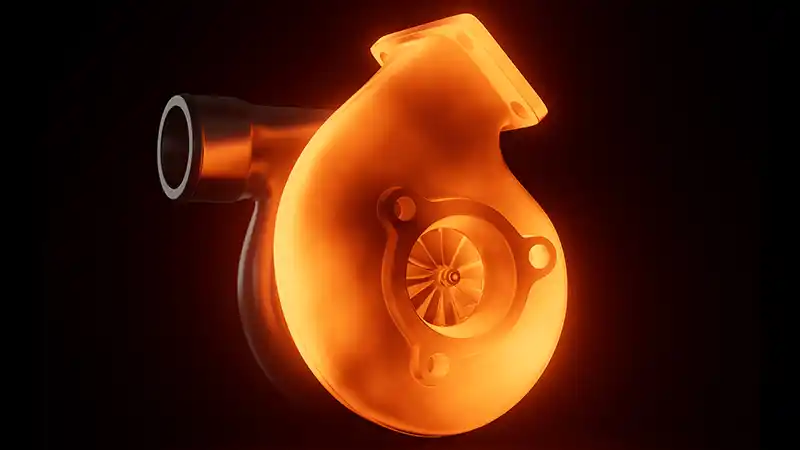
When A Turbo Fails, The Emissions System Usually Follows
On a modern diesel semi, the turbocharger is not just a power adder. It is the engine’s primary exhaust manager, controlling exhaust temperature, air fuel ratio, soot production, EGR function, DPF regeneration, SCR efficiency, DOC performance, and the conditions under which sensors read correctly.
Because of that, a turbo failure is rarely a single component event. It often starts a chain reaction that damages or destroys multiple aftertreatment parts in a very short window.
This guide explains why turbo failures are so destructive, the most common failure modes, how they trigger emissions collapse, the real cost of a full cascade, how to spot problems early, and how TruckProtect can help cushion the financial impact when things go wrong.
Why The Turbocharger Sits At The Center Of Aftertreatment Health
Every major emissions component depends on the turbo doing its job. The DPF needs high, stable exhaust flow. The DOC needs proper temperature to oxidize fuel. The SCR needs consistent NOx levels and exhaust velocity. EGR flow depends on the right intake and exhaust pressure balance. DEF dosing needs the right exhaust speed and temperature window. Sensors are calibrated for normal flow and heat patterns.
When the turbo stops managing exhaust correctly, temperatures, pressures, and soot levels swing out of range. Regens fail, soot piles up, and the entire aftertreatment system becomes unstable, sometimes within a single trip.
How Turbochargers Fail In Semi Trucks
Turbo failures usually trace back to a handful of root causes.
Bearing wear is the most common. Old or contaminated oil, inadequate lubrication, excessive heat, and long idle cycles wear out the bearings. The shaft starts to wobble, vanes get damaged, and boost drops.
Variable geometry turbos add another failure point. VGT vanes can seize from soot buildup, corrosion, actuator problems, or carbon deposits. When vanes stick, exhaust backpressure spikes and flow becomes erratic, which is deadly for emissions.
Actuator failures, whether electronic or pneumatic, mean the vanes no longer move as commanded. Boost control is lost, exhaust flow becomes unpredictable, and proper regens become nearly impossible.
Oil contamination or starvation can damage a turbo in minutes. Overspeed events, caused by boost leaks, poor fueling, DPF restriction, or aggressive downshifts under load, can shatter turbine blades. Exhaust leaks upstream of the turbo reduce the energy that drives it. Foreign object ingestion destroys compressor wheels instantly.
Each of these failures changes how exhaust moves through the system, and that is where the aftertreatment collapse begins.
The Turbo Failure Chain Reaction, From DPF To Sensors
When a turbo starts failing, the emissions system usually follows a predictable cascade.
First, poor turbo performance leads to poor combustion. The engine runs richer, intake pressure drops, and combustion becomes incomplete. Black smoke increases and soot production can jump by several hundred percent. The DPF starts loading at an abnormal rate.
Next, the DPF overloads. It sees rapid soot accumulation, uneven exhaust distribution, and insufficient regen temperatures. Backpressure rises. Forced regens start to fail, passive regens become impossible, and in many cases the DPF cracks or melts. Replacement typically costs 3,000 to 6,000 dollars.
The DOC struggles as well. It needs stable heat to do its job. A failing turbo can cause low exhaust temperature that prevents proper regens, or excessive unburned fuel that saturates and overheats the DOC, leading to cracking. DOC repairs usually cost 2,000 to 5,000 dollars.
The SCR system then receives unstable NOx levels and inconsistent exhaust conditions. DEF dosing becomes inaccurate, SCR efficiency faults appear, and the catalyst can be damaged. SCR repairs often land between 4,000 and 10,000 dollars.
EGR systems get overloaded by high soot, intake restriction, high exhaust temperature, and incorrect pressure differentials. EGR valves stick, coolers clog or crack, and flow becomes unreliable. EGR repairs typically cost 1,500 to 5,000 dollars.
Sensors are hit throughout this process. NOx sensors, EGT sensors, DPF pressure sensors, oxygen sensors, and exhaust temperature sensors are all exposed to abnormal heat and contamination. Individual sensors usually cost 200 to 900 dollars each.
Eventually, the ECM has seen enough. It responds with derates, limp modes, or no start protections. At that point, towing and full downtime are unavoidable.
The True Cost Of A Turbo Driven Aftertreatment Collapse
When you add up the pieces, the numbers get big quickly. A turbo replacement typically costs 2,500 to 7,500 dollars. A DPF is 3,000 to 6,000 dollars. A DOC is 2,000 to 5,000 dollars. An SCR system is 4,000 to 10,000 dollars. An EGR cooler is 2,000 to 5,000 dollars. Sensors can add 300 to 2,000 dollars. A DEF pump may cost 1,200 to 3,500 dollars. Labor for all of this can be 2,000 to 5,000 dollars. Downtime can easily add 1,000 to 7,000 dollars depending on how long the truck is parked.
Total exposure for a full turbo to aftertreatment cascade often lands between 15,000 and 40,000 dollars or more. That is why many owner operators and fleets look at TruckProtect coverage not because turbos fail every week, but because when they do fail, they tend to take the most expensive systems with them.
Early Warning Signs Of Turbo Trouble
The good news is that most turbos give some warning before they trigger a full collapse. Loss of power is the biggest indicator. Slow turbo spool and delayed boost are also common. Whistling, siren like, or grinding noises point to bearing or turbine damage.
Excessive black smoke points to poor combustion and high soot. Frequent failed regens or constantly rising soot load suggest the DPF is being overwhelmed. High exhaust gas temperature can indicate restricted flow or imbalance. Low boost pressure on a gauge or scan tool points to vane or actuator issues. Excess oil consumption or oil found in the charge air cooler piping suggests bearing seal failure.
Catching and addressing these signs early can turn a 20,000 dollar cascade into a much smaller turbo only repair.
How To Prevent Turbo Induced Emissions Disasters
Prevention starts with oil. Changing oil on time or slightly early, using the right spec, and avoiding contamination are critical because the turbo lives and dies on lubrication.
Avoiding long idle periods helps too. At idle, turbo speed and exhaust temperature are low, which encourages soot buildup in VGT vanes and exhaust paths. Warming the engine briefly before heavy load reduces cold bearing wear. Allowing a short cooldown period after hard pulls before shutdown protects bearings and housings from heat soak.
Fixing boost leaks immediately prevents overspeed events. Monitoring DPF and EGT data regularly can reveal abnormal patterns that point back to the turbo. Cleaning or replacing air filters frequently keeps restriction low and reduces turbo workload. Checking for exhaust leaks upstream of the turbo ensures it is getting the energy it needs to spin correctly.
These habits do not make a turbo immortal, but they do extend its life and reduce the odds of a catastrophic failure.
Where Warranty Coverage Fits In
Even with good maintenance and smart driving, turbos and emissions components eventually wear out. When a turbo fails badly, it often drags injectors, emissions hardware, sensors, and even engine components into the repair order.
TruckProtect plans commonly include turbo coverage along with aftertreatment, EGR, fuel system, and major engine components. Coverage can not stop a turbo from ever failing, but it can turn a 15,000 to 40,000 dollar surprise into a manageable, planned cost.
Conclusion, The Turbocharger Is The Emissions System’s First Domino
A failing turbo increases soot, disrupts exhaust temperature, blocks successful regens, damages the DOC, overloads the SCR, ruins EGR efficiency, and burns out sensors until the truck finally derates. The chain reaction is predictable, and so is the bill if it is ignored.
Understanding how tightly the turbo and aftertreatment are linked gives drivers and fleets a real advantage. With earlier detection, better habits, and the right protection strategy, you can keep one bad turbo from turning into a full scale emissions collapse.