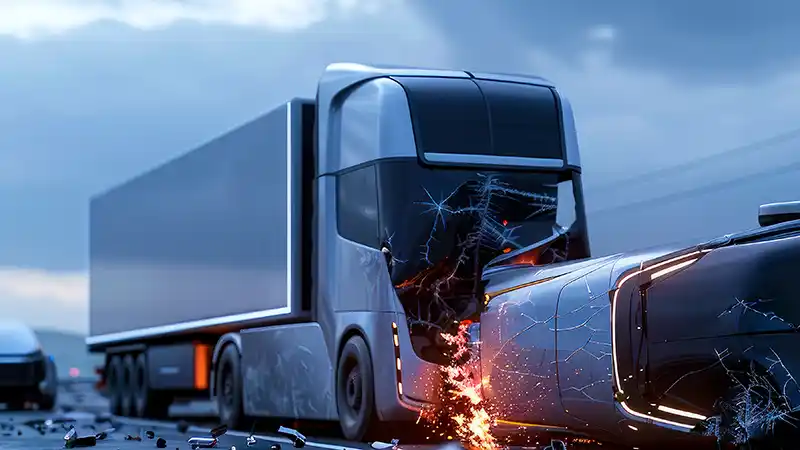
The American highway has always been a symbol of opportunity and risk. Now, as autonomous trucks begin to share the road with human drivers, the stakes are higher than ever. The promise of driverless freight, greater efficiency, fewer accidents, and lower costs, has captivated the logistics industry and policymakers alike. But what happens when things go wrong? When a driverless truck is involved in a collision, who is responsible? How do we ensure safety, assign liability, and deliver justice in a world where the “driver” might be an algorithm?
This article takes a deep dive into the complex, rapidly evolving world of safety and liability in autonomous trucking. We’ll explore the current legal frameworks, the operational realities for fleets and insurers, the ethical dilemmas, and the likely future of accountability on America’s highways.
The Rise of Autonomous Trucks: Promise and Peril
Autonomous trucking is no longer a futuristic dream. In states like Texas and Arizona, fully driverless trucks are already hauling commercial loads between major cities. Companies like Aurora, Waymo Via, Kodiak, and TuSimple have logged millions of miles with varying levels of human supervision. The technology promises a revolution: trucks that never tire, never get distracted, and can operate 24/7, potentially reducing both costs and accidents.
But the transition is fraught with uncertainty. Unlike passenger cars, which operate in relatively predictable environments, Class 8 trucks are massive, heavy, and often carry hazardous cargo. Their sheer size means that when accidents do occur, the consequences can be severe. And with no human driver to question or blame, traditional notions of fault and responsibility are upended.
Safety: The New Standard
Safety is the foundational promise of autonomous vehicles. Proponents argue that AI-powered trucks will eliminate the vast majority of crashes caused by human error—fatigue, distraction, impairment, or poor judgment. Early pilot programs have shown promising results, with driverless trucks logging hundreds of thousands of miles without serious incident.
Yet, perfection is impossible. Sensors can be blinded by fog or snow. Algorithms may misinterpret a construction zone or a roadside emergency. Edge cases, rare, unpredictable situations—are a constant challenge for even the most advanced AI. As fleets scale up autonomous operations, the statistical inevitability of accidents looms.
To ensure safety, companies deploy redundant sensors, remote monitoring teams, geofencing, and strict operational design domains (ODDs) that restrict driverless trucks to certain highways and weather conditions. Regulators require detailed safety cases, real-time data sharing, and incident reporting. But as the technology matures and driverless trucks begin to venture beyond well-mapped corridors, the industry must grapple with a new reality: when, not if, a crash occurs, who is to blame?
The Shifting Landscape of Liability
In the traditional world of trucking, liability is relatively straightforward. If a truck is involved in a crash, the driver, the carrier, and sometimes the shipper can be held responsible, depending on the circumstances. Insurance policies, federal regulations, and decades of case law provide a roadmap for resolving disputes.
Autonomous trucks disrupt this model. With no human driver, responsibility may shift to the technology provider, the manufacturer, the fleet operator, or even the software developer who wrote the code that made a split-second decision. The legal system is racing to keep up.
Product Liability vs. Operator Liability
One of the central questions is whether an autonomous truck is more like a traditional vehicle (where the driver and carrier are primarily responsible) or a complex product (where the manufacturer and software provider bear more liability).
If a sensor fails, is it a manufacturing defect? If an algorithm misinterprets a situation, is it a design flaw? If a fleet fails to update software or maintain equipment, is it operator negligence? Courts are already grappling with these questions in early cases involving passenger vehicles, and the answers are likely to shape the future of trucking liability.
Insurance in a Driverless World
Insurance is the financial backbone of the transportation industry. Today, carriers purchase liability coverage based on miles driven, cargo value, and driver history. With autonomous trucks, the risk profile changes. Some insurers are developing new products that cover software errors, cyberattacks, and product defects. Others are partnering with technology providers to share real-time data, enabling dynamic pricing and faster claims resolution.
As the industry matures, we may see a shift from traditional liability insurance to product liability and even “no-fault” models, where compensation is paid regardless of blame. The key will be transparency—fleets, insurers, and regulators must have access to detailed data on vehicle performance, decision-making, and maintenance.
Real-World Incidents: Lessons and Precedents
While the number of serious autonomous truck crashes remains low, early incidents have already set important precedents. In one high-profile case, a driverless truck equipped with an early-stage autonomy system struck a disabled vehicle on a Texas highway. The investigation focused on whether the truck’s sensors should have detected the obstacle, whether the remote monitoring team responded appropriately, and whether the fleet had maintained the system according to manufacturer guidelines.
In another case, a software update introduced a bug that caused a truck to misinterpret lane markings, resulting in a minor collision. The manufacturer quickly issued a recall and updated the code, but the incident raised questions about software liability and the duty to maintain and update autonomous systems.
These cases illustrate the complexity of assigning fault in a driverless world. Was it a hardware failure, a software bug, or a maintenance lapse? Should the technology provider, the fleet, or both share responsibility? As more incidents occur, courts and regulators will develop new frameworks for answering these questions.
The Role of Data: Black Boxes and Transparency
Data is the linchpin of autonomous trucking liability. Every driverless truck is equipped with a “black box” that records sensor data, vehicle actions, and software decisions in real time. In the event of a crash, this data provides a detailed record of what happened, helping investigators, insurers, and courts determine cause and responsibility.
However, access to this data is a contentious issue. Technology providers may claim proprietary rights, while fleets and accident victims demand transparency. Regulators are beginning to require standardized data formats and retention policies to ensure fair and timely investigations.
The push for transparency extends beyond crashes. Real-time data sharing between fleets, insurers, and regulators can enable proactive safety interventions, faster claims processing, and even dynamic insurance pricing based on actual risk.
Regulatory Approaches: State and Federal Action
The regulatory landscape for autonomous trucking is fragmented and evolving. Some states, like Texas and Arizona, have embraced driverless trucks, offering clear rules and permitting processes. Others, like California and New York, have taken a more cautious approach, requiring human safety drivers or limiting autonomous operations.
At the federal level, the National Highway Traffic Safety Administration (NHTSA) and Federal Motor Carrier Safety Administration (FMCSA) are developing guidelines for autonomous vehicle safety, data sharing, and incident reporting. While comprehensive federal legislation remains elusive, industry groups are pushing for harmonized rules to avoid a patchwork of state laws.
One promising approach is the development of “safety cases”—detailed, evidence-based documents that outline how an autonomous system meets or exceeds safety standards. These cases can be reviewed by regulators, insurers, and independent experts, providing a transparent basis for permitting and liability decisions.
Fleets and Technology Providers: Building a Culture of Safety and Accountability
For fleets deploying autonomous trucks, safety and liability are not just legal concerns—they’re business imperatives. Leading carriers are investing in robust safety management systems, continuous driver and technician training, and close partnerships with technology providers.
Many fleets require regular software updates, rigorous maintenance schedules, and detailed incident reporting. Some are even hiring “autonomous safety officers” to oversee compliance and serve as liaisons with regulators and insurers.
Technology providers, for their part, are designing systems with multiple layers of redundancy, real-time monitoring, and “fail-safe” modes that bring trucks to a safe stop in the event of a malfunction. They are also working with insurers to develop new risk models and with regulators to shape emerging standards.
The Ethical Dimension: Programming for Safety
Autonomous trucks must make split-second decisions in complex, unpredictable environments. How should an algorithm prioritize safety when faced with an unavoidable crash? Should it protect the occupants of the truck, other vehicles, or pedestrians? These ethical dilemmas, once the domain of philosophers, are now the responsibility of software engineers and fleet managers.
Industry groups and ethicists are developing guidelines for “ethical AI,” emphasizing transparency, fairness, and continuous improvement. Fleets must ensure that their technology partners adhere to these principles and that their own operations reflect a commitment to safety above all else.
The Future: Toward a New Liability Paradigm
As autonomous trucking scales, the industry will likely move toward a new paradigm of shared liability. Fleets, technology providers, insurers, and regulators will collaborate to create systems that prioritize safety, enable rapid investigation and compensation after incidents, and continuously learn from every mile driven.
Key elements of this future include:
- Standardized data sharing and transparency protocols
- Clear delineation of responsibility among fleets, technology providers, and manufacturers
- Adaptive insurance models that reflect the actual risk profile of autonomous operations
- Ongoing training and certification for technicians, operators, and remote monitoring teams
- Robust regulatory frameworks that keep pace with technological change
Conclusion
The arrival of autonomous trucks is transforming not just how freight moves, but how we think about safety and responsibility on the road. In this new world, liability is no longer the sole domain of the driver or the carrier, it’s a shared, dynamic, and transparent process involving fleets, technology providers, insurers, and regulators.
For fleets, embracing a culture of safety, investing in robust data management, and building strong partnerships will be the keys to navigating this new landscape. For policymakers and the public, the challenge will be to ensure that innovation doesn’t come at the expense of accountability and justice. The road ahead is complex, but with thoughtful action, the promise of safer, more efficient, and more equitable trucking can be realized.