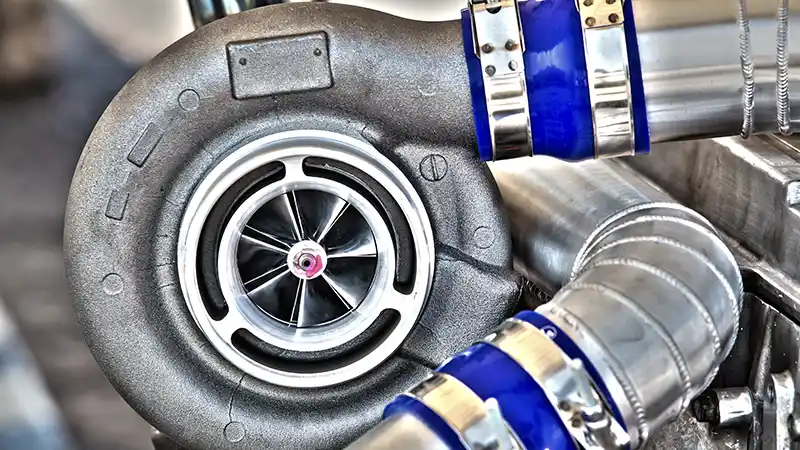
Turbocharger failures are one of the most stressful and expensive problems owner-operators face in modern trucking.
Most drivers understand that turbochargers are important for power, fuel economy, and emissions performance. What many operators do not realize is that turbo problems rarely happen instantly. Most catastrophic turbo failures begin with small warning signs, unusual noises, smoke, oil leaks, and gradual power loss.
Unfortunately, many drivers keep running because they’re trying to finish loads, avoid downtime, or delay repair costs temporarily. The problem is that ignoring turbo failure symptoms often leads to catastrophic engine damage, severe downtime, oil contamination, emissions failures, expensive repair bills, and lost revenue.
Modern diesel engines rely heavily on turbochargers for both performance and emissions compliance. That means turbo problems are more serious and more expensive than ever before in 2026. Understanding turbo failure symptoms early can save owner-operators thousands of dollars and help prevent catastrophic engine damage.
What does a turbocharger do?
A turbocharger uses exhaust gases to spin a turbine that forces additional air into the engine. More air allows the engine to burn fuel more efficiently and produce more power.
That improved airflow supports:
· Engine power and torque
· Fuel economy
· Combustion efficiency
· Emissions performance
Modern semi trucks depend on turbo systems to maintain proper airflow, fuel efficiency, engine performance, and emissions compliance. When the turbo is not working correctly, the truck usually does not just feel like it has “a little less power.” It can become inefficient, smoky, and increasingly unreliable, and in some cases it can trigger fault codes and derates that take you off the road.
Why turbo failures become expensive fast
Turbochargers operate under extremely high temperatures, high pressure, intense RPMs, and heavy workloads. They are precision components that depend on clean oil and stable operating conditions.
As turbo problems develop, damage can spread rapidly throughout the engine and emissions systems. A failing turbo may contaminate the engine with oil, metal debris, and excessive heat. That contamination can eventually damage bearings, pistons, injectors, emissions systems, and internal engine components.
This is why early diagnostics matter. A turbo replacement is expensive, but it is often far less expensive than what happens when a failing turbo takes other systems down with it.
If you want the bigger picture of what breaks most often on the road, see: Most Common Semi Truck Breakdowns (And How to Avoid Them).
Semi truck turbo failure symptoms to watch for
Turbo issues usually show up as changes in sound, smoke, power, oil behavior, and fault codes. The key is to treat these symptoms as early warnings, not annoyances.
1) Excessive smoke
Smoke is one of the most common turbo failure symptoms, and the color can offer clues.
Blue smoke
Blue smoke commonly indicates oil burning. That can happen when turbo seals wear and oil leaks into the intake or exhaust side, then burns during operation.
If you see blue smoke and you’re also adding oil more frequently, do not assume it is “just an old engine.” A turbo seal issue can get worse quickly.
Black smoke
Black smoke often signals poor airflow, boost pressure problems, or a fuel and air imbalance. When the turbo cannot push enough air, combustion becomes less complete and soot increases.
Black smoke is also a red flag for emissions health. More soot can mean more DPF stress, more regen events, and more downtime.
White smoke
White smoke can point to coolant-related issues or severe combustion abnormalities. It can also show up when something is seriously off in the air and fuel process.
Any sudden or persistent smoke change should be treated as a diagnostic priority, especially if it’s paired with power loss or fault codes.
2) Whining or siren-like noises
One of the most common early turbo failure symptoms is a high-pitched whining noise, sometimes described as a siren sound.
Turbochargers spin at extremely high RPMs. As bearings wear or lubrication becomes compromised, you may hear whining, siren-like sounds, or unusual airflow noises.
Operators often ignore these sounds because the truck still pulls. But that is exactly how catastrophic turbo failures happen later.
3) Loss of power or weak pull under load
Turbochargers play a major role in engine performance. When boost pressure drops, acceleration slows, pulling power decreases, throttle response weakens, and hill climbing performance suffers.
Many operators first notice turbo problems through reduced power under heavy loads. If your truck feels lazy in situations where it used to feel strong, treat it as a symptom, not a mood.
4) Oil leaks around turbo components
Turbochargers rely on clean oil flow for lubrication and cooling. Oil leaks can indicate seal failure, excessive wear, pressure issues, or internal damage.
You may notice oil around the turbo housing, oil residue in charge air piping, smoke from oil hitting hot components, or increased oil consumption.
Ignoring oil leaks often accelerates turbo wear dramatically, and it increases the risk of oil contamination spreading.
5) Increased oil consumption
Many drivers notice oil levels dropping faster than normal when turbo problems begin developing. This can indicate turbo seal wear, internal leakage, or oil contamination.
Increased oil consumption should always be investigated quickly. Low oil conditions do not just hurt the turbo. They can damage the engine itself.
6) Check engine lights, boost faults, or derates
Modern trucks rely heavily on boost pressure sensors, airflow monitoring, electronic diagnostics, and emissions sensors.
Turbo problems frequently trigger fault codes, warning lights, derates, and reduced power modes.
Drivers should not ignore repeated boost pressure warnings, airflow codes, or emissions faults. They may be symptoms of a turbo issue developing underneath.
7) Excessive exhaust heat
Turbocharger problems can increase exhaust temperatures, heat buildup, and airflow restrictions. Excessive heat can damage emissions systems, pistons, bearings, turbo components, and internal engine surfaces.
Heat is one of the most destructive forces inside modern diesel engines. If you suspect heat issues, do not keep pushing the truck just to get home.
Most common causes of turbo failure
Turbochargers rarely fail without an underlying reason. Most failures trace back to conditions that slowly wear the turbo down.
Dirty oil
Dirty oil is one of the leading causes of turbocharger failure. Turbos depend on clean oil to lubricate bearings and rotating assemblies.
Contaminated oil creates excessive friction, heat buildup, bearing wear, and internal damage. Stretching oil intervals dramatically increases turbo failure risk.
Excessive heat
Turbochargers live in a high-heat environment. Repeated heat stress weakens bearings, seals, and rotating components.
Cooling system problems can contribute directly to turbo damage. If your truck has a history of overheating, your turbo is living a harder life than you think.
Restricted airflow
Turbochargers rely on proper airflow. Restricted airflow creates excessive strain, heat buildup, reduced efficiency, and higher failure risk.
Common airflow problems include dirty air filters, intake restrictions, clogged systems, and leaks.
Poor maintenance and delayed diagnostics
Many turbo failures come from a pattern, not a single event. Delayed oil changes, ignored diagnostics, overheating, and poor airflow maintenance all contribute to turbo wear.
Why small turbo problems become catastrophic
One of the biggest mistakes operators make is continuing to operate the truck after symptoms appear.
A small turbo problem can lead to oil contamination, engine damage, emissions failures, internal component damage, and catastrophic rebuilds.
A repair that might have cost several thousand dollars early can become an engine rebuild costing tens of thousands later. The cost is not just money. It is time, stress, and lost revenue.
Why downtime matters so much with turbo issues
Turbo failures often create immediate downtime, derates, towing costs, lost loads, missed revenue, and schedule disruption.
A truck that cannot maintain proper airflow or emissions performance can become nearly unusable. For owner-operators, downtime quickly becomes a major financial threat.
If you want a breakdown-focused view of downtime economics, see: Most Common Semi Truck Breakdowns (And How to Avoid Them).
Why modern trucks are more sensitive to turbo problems
Older trucks were often more forgiving when turbo performance declined. Modern trucks depend heavily on turbochargers for emissions compliance, fuel economy, airflow management, and overall drivability.
That means turbo issues now affect DPF systems, DEF systems, fuel economy, emissions performance, and engine operation.
Turbo reliability matters far more today than it did years ago.
What to do when you notice turbo failure symptoms
When symptoms show up, your goal is to reduce the chance of a small issue turning into contamination or a full failure.
Practical next steps:
· Do not ignore new noises, smoke, or sudden power loss
· Check oil level and look for signs of leaks around the turbo and piping
· Pay attention to fault codes, especially boost and airflow related
· Reduce hard pulls until you can get proper diagnostics
· Get the truck inspected before the turbo sheds debris or oil into the system
If you’re trying to decide whether to keep running one more load, remember this. The most expensive turbo failures are the ones that were audible and visible first.
Preventative maintenance is still the best defense
The best way to reduce turbo failure risk is still preventative maintenance.
Smart operators focus heavily on oil changes, cooling system health, airflow inspections, diagnostics, and leak inspections.
Consistent maintenance dramatically reduces catastrophic turbo failures.
Why oil changes matter so much
Turbochargers depend on clean oil. Dirty oil increases bearing wear, heat, friction, and lubrication problems.
Consistent oil intervals are one of the most important ways to protect turbo life.
Cooling systems matter too
Cooling system problems contribute to excessive heat, turbo wear, and airflow inefficiency. Even small overheating issues should never be ignored.
Diagnostics should never be ignored
Modern trucks provide fault codes, airflow warnings, boost pressure diagnostics, and emissions alerts. Ignoring warning lights allows small turbo issues to become catastrophic failures later.
Warranties and turbo failure risk
As turbo and engine repair costs continue rising, more owner-operators are researching warranty companies, protection plans, and repair coverage.
No warranty covers everything, and preventative maintenance still matters. However, some operators use warranties to reduce catastrophic repair exposure from major failures.
Some newer providers like TruckClub are gaining attention because they focus on owner-operators and small fleets, offer flexible payment structures, publish coverage information online, and include some items like seals, gaskets, and certain electronics. That transparency allows operators to compare options carefully before purchasing coverage.
If you’re comparing coverage types, start here: Manufacturer vs. Third-Party Truck Warranties, What Owner-Operators Should Know.
Smart operators think differently
Successful operators monitor warning signs early, maintain aggressively, diagnose issues quickly, avoid delaying repairs, and protect uptime aggressively.
They understand that reliability directly affects profitability.
Final takeaway
Turbo failures rarely happen instantly. Most catastrophic turbo problems begin as small ignored warning signs.
The smartest owner-operators understand:
· Dirty oil destroys turbos
· Heat destroys components
· Diagnostics matter
· Maintenance matters
· Downtime destroys profitability
Catching turbo problems early is almost always cheaper than rebuilding an engine later. In today’s trucking industry, reliability is profitability.
FAQ
What are the signs of a bad turbo on a semi truck?
Smoke, whining noises, oil leaks, power loss, and increased oil consumption are common signs.
What causes turbo failure?
Dirty oil, excessive heat, restricted airflow, and poor maintenance are major causes.
Can a bad turbo damage an engine?
Yes. Turbo failure can spread oil contamination and debris throughout the engine.