Winter separates prepared drivers from lucky ones, and luck runs out. Snow, ice, high winds, and bitter cold turn routine runs into dangerous ones and can leave you stranded far from help. The good news is that the drivers who take winter seriously stay safe, keep rolling when others are parked, and avoid the accidents and breakdowns that pile up this time of year.
This guide covers cold weather preparation for truckers from top to bottom. We will walk through prepping your truck, the driving techniques that keep you upright on ice, the emergency kit that could save your life, and how to stay warm and healthy through the season. Winter is not the time to wing it, and a little preparation goes a very long way.
Prepare your truck before the cold hits
Winter readiness starts before the first storm. A truck that is not prepped for the cold will let you down at the worst possible moment. Getting ahead of the season is far easier than scrambling when the temperature drops.
Check your batteries and charging system
Cold weather is brutal on batteries. A battery that starts fine in fall can fail on the first hard freeze. Have your batteries and charging system checked before winter so you are not stuck with a truck that will not start in a frozen parking lot.
Winterize your fuel and fluids
Diesel can gel in extreme cold, which can leave you stranded. Use the right winter fuel and additives for the conditions, and make sure your coolant and other fluids are rated for the temperatures you will face. These small steps prevent some of the most common winter breakdowns.
Inspect tires, brakes, and lights
Your tires are your grip on a slippery road, so check tread and condition carefully. Make sure your brakes are in good shape and your lights are all working, because winter means shorter days and worse visibility. This kind of inspection fits right into a solid maintenance routine, and our guide on preventative maintenance for semi trucks covers keeping your truck road-ready year round.
Carry chains and know how to use them
In many mountainous and northern areas, tire chains are required when conditions get bad. Carry the chains you need for your routes, make sure they fit, and practice putting them on before you are doing it in a blizzard on the side of a mountain. Fumbling with chains for the first time in a storm is dangerous and miserable.
Know the chain laws for the areas you run. Getting caught without required chains can shut down your trip and get you fined. Being ready keeps you legal and moving when others are stuck.
Driving techniques for snow and ice
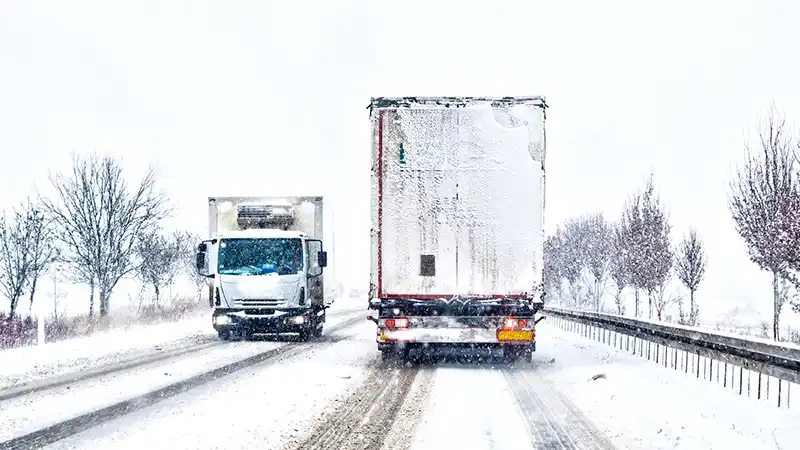
How you drive in winter matters more than anything. The single most important rule is to slow down. Speed limits are set for good conditions, and winter is not good conditions. Give yourself more time and more space.
Increase your following distance
Stopping distances grow dramatically on snow and ice. Leave far more room than you would in dry weather so you have time to react and stop gently. Tailgating in winter is asking for a jackknife or a rear-end collision.
Be smooth with everything
Sudden inputs cause loss of control on slick roads. Accelerate gently, brake early and softly, and steer smoothly. Treat the controls as if there is an egg under the pedal. Smoothness keeps your traction where you need it.
Watch for black ice and bridges
Black ice is invisible and deadly, and bridges and overpasses freeze first because cold air surrounds them. Be especially cautious on bridges and in shaded spots, and watch for the telltale sheen that hints at ice. When in doubt, slow down further.
Know when to shut it down
The most important winter skill is knowing when not to drive. No load is worth your life. If conditions are beyond safe, park it. A late load is a problem you can fix, but an accident may not be. Experienced drivers respect the weather and are not too proud to wait it out.
Build a winter emergency kit
If you do get stranded, an emergency kit can be the difference between an inconvenience and a crisis. Pack extra warm clothing, blankets, gloves, and a hat, because a broken-down truck loses heat fast. Carry extra food and water that will not spoil, since help can be hours away in a storm.
Include a flashlight with spare batteries, a first aid kit, traction aids like sand or cat litter, a small shovel, and warning devices to make yourself visible. Keep your phone charged and carry a backup power source. Building this kit before winter means it is there when you need it most.
Take care of yourself in the cold
Winter is hard on your body as well as your truck. Dress in layers so you can adjust, and keep dry clothing on hand because getting wet in the cold is dangerous. Stay hydrated even when you do not feel thirsty, and keep warm food and drink accessible.
Fatigue is worse in winter because the driving is more demanding and the days are dark. Rest well, take breaks, and do not push through exhaustion in tough conditions. Staying sharp is a safety issue when the roads are treacherous.
Common winter mistakes
The first mistake is not prepping the truck before the cold arrives, leading to breakdowns that were entirely preventable. The second is driving too fast for conditions out of a desire to stay on schedule. The third is not carrying or knowing how to use chains. The fourth is skipping the emergency kit and being unprepared if stranded.
The biggest mistake is letting a delivery deadline push you into driving when you should have parked. Pressure to deliver is real, but no schedule is worth an accident. The best winter drivers plan for delays and never let the clock override their judgment about safety.
Frequently asked questions
How do I keep diesel from gelling in the cold?
Use winter-blend fuel and appropriate anti-gel additives rated for the temperatures you will face, and keep your tank fuller in extreme cold. Gelled fuel is a common cause of winter breakdowns, and prevention is far easier than dealing with it on the roadside.
When should I put on chains?
Follow the chain laws for the areas you run, which dictate when chains are required based on conditions. Carry the right chains, make sure they fit, and practice installing them before you need to. Getting caught without required chains can halt your trip and bring fines.
What should be in a winter emergency kit?
Extra warm clothing, blankets, non-perishable food and water, a flashlight with spare batteries, a first aid kit, traction aids, a small shovel, warning devices, and a way to keep your phone charged. The kit should let you stay warm and safe if you are stranded for hours.
How do I know when it is too dangerous to drive?
Trust your judgment and the conditions over the schedule. If visibility is gone, the road is sheet ice, or you no longer feel in control, it is time to park. No load is worth your safety, and a delay is always better than an accident.
Final takeaway
Winter rewards preparation and punishes complacency. Prep your truck before the cold, carry and know how to use chains, and drive slow and smooth with plenty of following distance. Build a real emergency kit, take care of your body, and above all, know when to shut it down. The drivers who take winter seriously get through the season safely and keep earning, while those who wing it too often end up in a ditch or a repair shop. Respect the weather, plan ahead, and let no deadline override your safety.